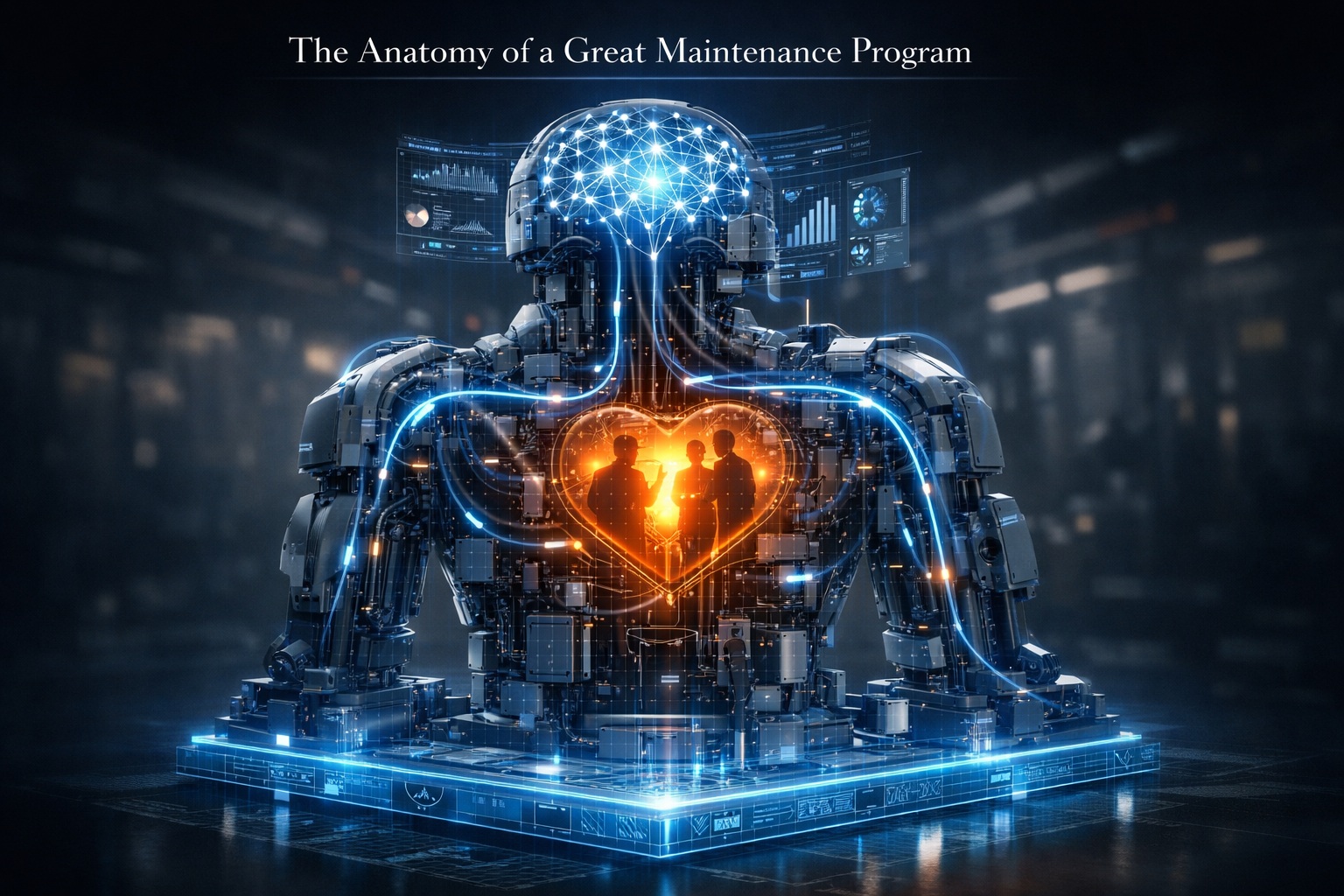
The Anatomy of a Great Maintenance Program: More Than a Cost Center
By UpFix
Learn what separates a world-class maintenance program from a reactive cost center, from preventive maintenance strategy to reliability culture and continuous improvement.
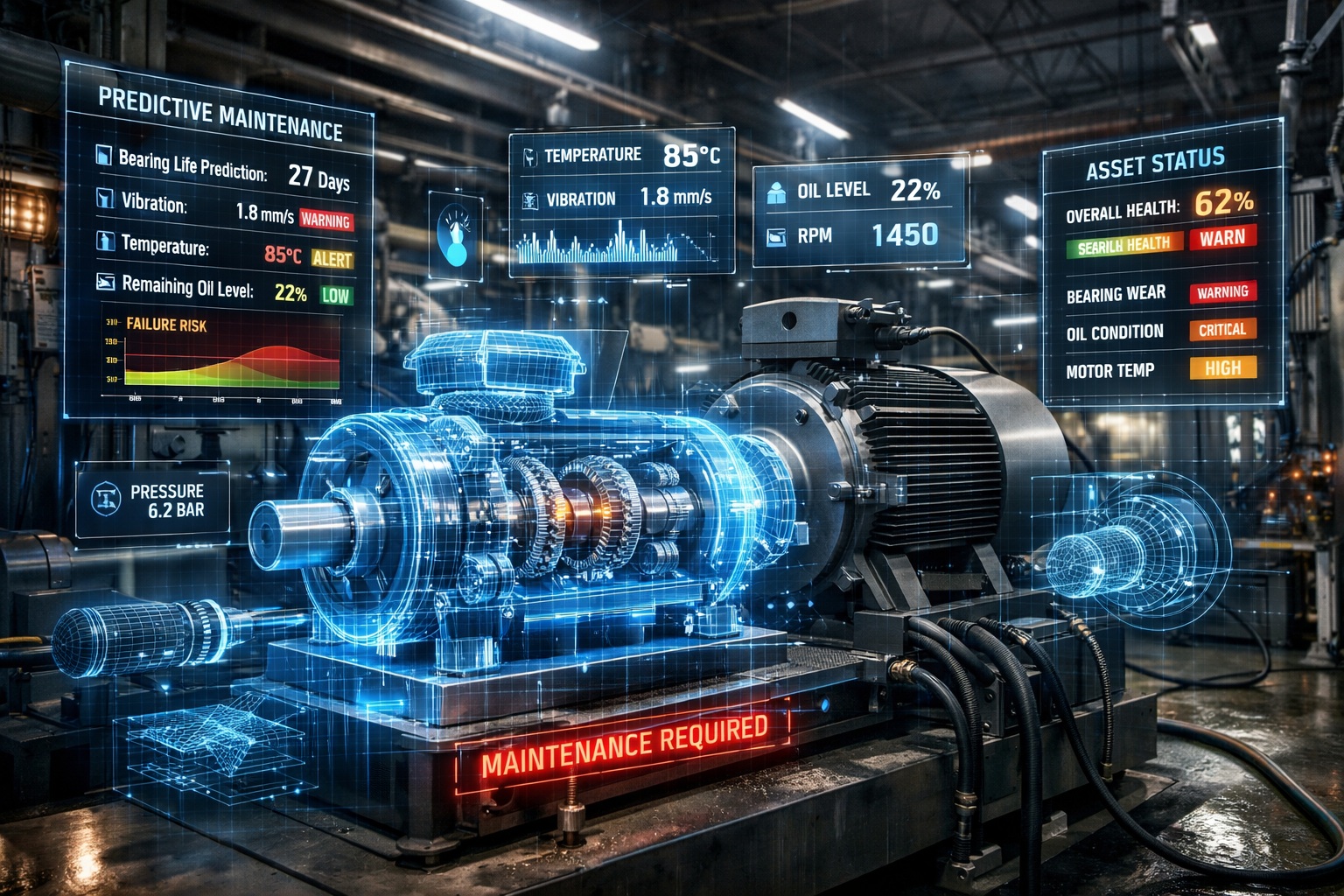
The operating models and AI examples in this article are illustrative. They are not a specification of included UpFix features or a measured customer result. See product capabilities and plan limits for the current offer.
From Cost Center to Strategic Asset
For decades, the maintenance department was viewed as a necessary evil, a cost center relegated to the operational background, called upon only when something broke. That era is over. Today, a world-class maintenance program is a powerful competitive advantage, a strategic driver of profitability, and a cornerstone of operational excellence. But what separates a truly great program from a mere reactive cost center?
The answer lies in its anatomy. A great maintenance program isn't just a collection of tools and schedules; it's a living, breathing organism, a strategic fusion of proactive planning, smart technology, skilled people, and an unwavering commitment to continuous improvement. Let's dissect this anatomy.
The Foundation – Proactive Planning & Strategy
The bedrock of any elite maintenance program is its strategic framework. This is the fundamental shift from a reactive, "if it ain't broke, don't fix it" mentality to a proactive, data-driven approach.
Alignment with Business Goals: A great program doesn't exist in a vacuum. Its goals are intrinsically linked to the overarching objectives of the business. As consultancy Strategic Work Systems emphasizes, maintenance actions must directly contribute to business goals. Instead of just tracking "wrench time," a strategic program measures its impact on production capacity, product quality, and profitability. The question changes from "How quickly can we fix it?" to "How does this maintenance activity support our business's success?"
Data-Driven Metrics: Choose measures such as planned work, preventive maintenance completion, backlog age, and equipment availability. Set targets against your operating requirements and baseline; a universal percentage is not a substitute for understanding your assets and workload.
The Brain – Smart Technology Integration
Technology is the nervous system of a modern maintenance program, transmitting data and enabling intelligent action. However, it's not a silver bullet. Technology is an enabler, not a replacement for strategy.
Beyond the CMMS: While a Computerized Maintenance Management System (CMMS) is a foundational tool, a great program uses a wider array of technologies. As noted by Maintworld magazine, technologies like condition-monitoring sensors (IoT), predictive analytics, and automation are revolutionizing the field. These tools allow teams to move beyond preventive maintenance (fixing things on a schedule) to predictive maintenance (fixing things right before they fail), optimizing resource allocation and minimizing downtime.
Empowering the Technician: Technology also empowers the people on the ground. As MRO Magazine highlights, tools like Augmented Reality (AR) and Virtual Reality (VR) are transforming training and remote assistance. A technician can now access digital manuals, view live data overlays on equipment, or receive expert guidance from anywhere in the world, dramatically improving first-time fix rates and safety.
The Heart – Skilled People & Culture
Even the most advanced technology is useless without skilled, motivated people to wield it. The human element is the heart of a great maintenance program, pumping life and intelligence throughout the organization.
Investing in People: A world-class program invests heavily in its people. This means continuous training, clear career progression paths, and empowerment to make decisions. It's about creating a culture where technicians are seen as reliability professionals, not just mechanics.
Addressing Human Factors: As extensive research from sources like Reliabilityweb and HumanFactors101 points out, "human error" is rarely just an individual failing. It's often a symptom of a flawed system, poorly written procedures, inadequate tools, immense time pressure, or a lack of communication. A great program proactively identifies and mitigates these systemic risks, creating an environment where people can succeed. It fosters a culture of open communication and psychological safety, where reporting a near-miss is encouraged, not punished.
The Immune System – Continuous Improvement
A great maintenance program, like any living organism, must adapt to survive and thrive. A culture of continuous improvement is its immune system, constantly seeking out threats and opportunities to get better.
Root Cause Analysis: When a failure does occur, a reactive team patches the problem and moves on. A proactive team conducts a thorough Root Cause Analysis (RCA). They ask "why" repeatedly until they uncover the fundamental issue, ensuring the same failure doesn't happen again. This transforms every failure into a learning opportunity.
Feedback Loops: The program actively seeks feedback from all levels. Operators, technicians, engineers, and planners work collaboratively. Information flows freely, allowing for the constant refinement of maintenance strategies, procedures, and designs.
Conclusion: A Strategic Imperative
Dissecting a great maintenance program reveals a sophisticated, interconnected system. Proactive planning provides the foundation, smart technology acts as the brain, skilled people are its heart, and a culture of continuous improvement serves as its immune system.
Moving from a cost center to a strategic asset isn't a simple switch; it's a cultural and operational transformation. But for organizations willing to make the investment, the rewards are immense: increased safety, enhanced productivity, greater profitability, and a powerful, sustainable competitive advantage in an ever-changing industrial landscape.
Key Takeaways
- A world-class maintenance program is a strategic asset, not just a cost center.
- The foundation is a proactive strategy (PM/PdM) aligned directly with business goals.
- Technology like CMMS and IoT is an enabler, but skilled, empowered people are the heart of the program.
- Addressing "human factors" by improving systems and procedures is critical to reliability.
- Continuous improvement through root cause analysis and feedback loops is essential for long-term success.
Signals to Watch (Next 6 Months)
- Increased adoption of AI-driven predictive maintenance to optimize scheduling.
- Greater use of AR/VR for remote assistance and technician training.
- A growing focus on data analytics to justify maintenance budgets and prove ROI.
- Stronger integration between maintenance (OT) and business (IT) systems.
- A cultural shift towards viewing technicians as "reliability professionals."
UpFix is an operations and work management platform with CMMS capabilities. Keep requests, Work Items, procedures, and service history together. Recurring automations require Team or Pro; inventory, analytics, purchasing, and the built-in Assistant require Pro. Connected meter data depends on supported integrations and configuration.