The $125,000/Hour Question: Are You Investing in AI Maintenance or Just Watching It Happen?
By UpFix
Predictive maintenance is becoming a competitive necessity as downtime costs soar. Learn how AI maintenance improves uptime, ROI, and operational resilience.
The operating models and AI examples in this article are illustrative. They are not a specification of included UpFix features or a measured customer result. See product capabilities and plan limits for the current offer.
A Market Reaches its Tipping Point
On February 4, 2026, a market intelligence report sent a clear and startling signal to industrial leaders worldwide. It wasn't a forecast about a niche technology; it was a declaration that the era of AI-powered predictive maintenance has unequivocally arrived. The report, from Astute Analytica, projected the global predictive maintenance market will surge to $91.04 billion by 2033. This isn't the slow burn of incremental change; it's the explosive growth of a foundational business strategy reaching its tipping point.
For executives and plant managers, this number changes the conversation. The question is no longer if AI will transform maintenance, but how quickly you can adapt to a landscape where your competitors are already leveraging it. The financial drivers are too powerful to ignore, and the cost of inaction is now being measured in real-time.
The Staggering Economics of Downtime
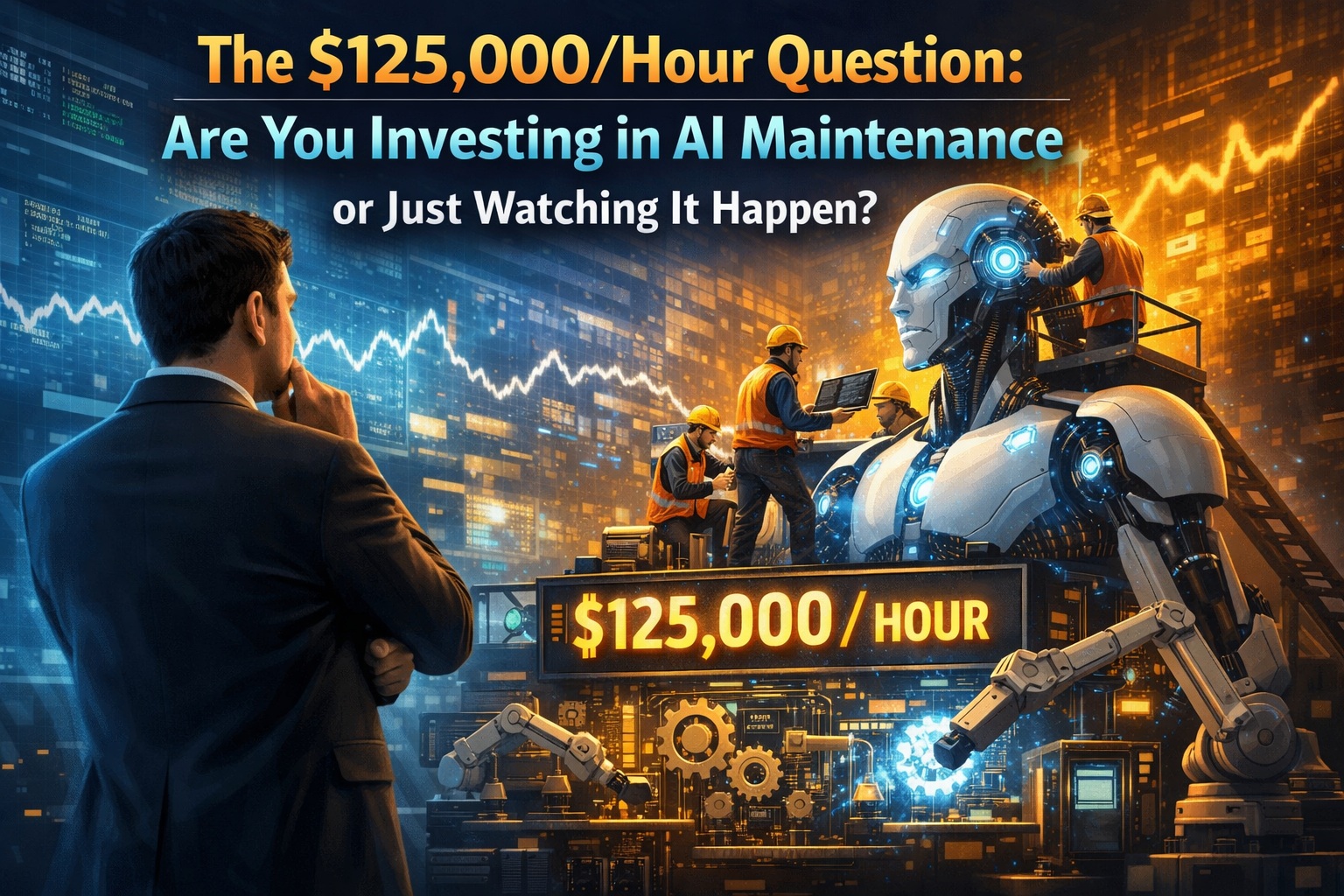
The catalyst behind this multi-billion dollar market is a single, brutal metric: the cost of unplanned downtime. The same report highlighted a median loss of $125,000 per hour across eleven key industries, including oil and gas, chemicals, and metals. When a critical asset fails, the immediate repair cost is often a fraction of the real damage. The true cost is in lost production, missed orders, contractual penalties, and reputational harm.
For years, the industry has treated a certain amount of downtime as a cost of doing business. That assumption is now obsolete. The combination of accessible AI platforms, cheaper IoT sensors, and immense competitive pressure has created a new performance baseline. Companies are discovering that they can move from a reactive or preventive maintenance posture to a predictive one, effectively turning maintenance from a cost center into a strategic driver of uptime and profitability. This isn't a theoretical exercise; it's a financial arms race.
Root Causes: Why the AI Maintenance "Moment" is Happening Now
The concept of predictive maintenance isn't new, but its widespread, practical application is. Several forces have converged to make 2026 the inflection point.
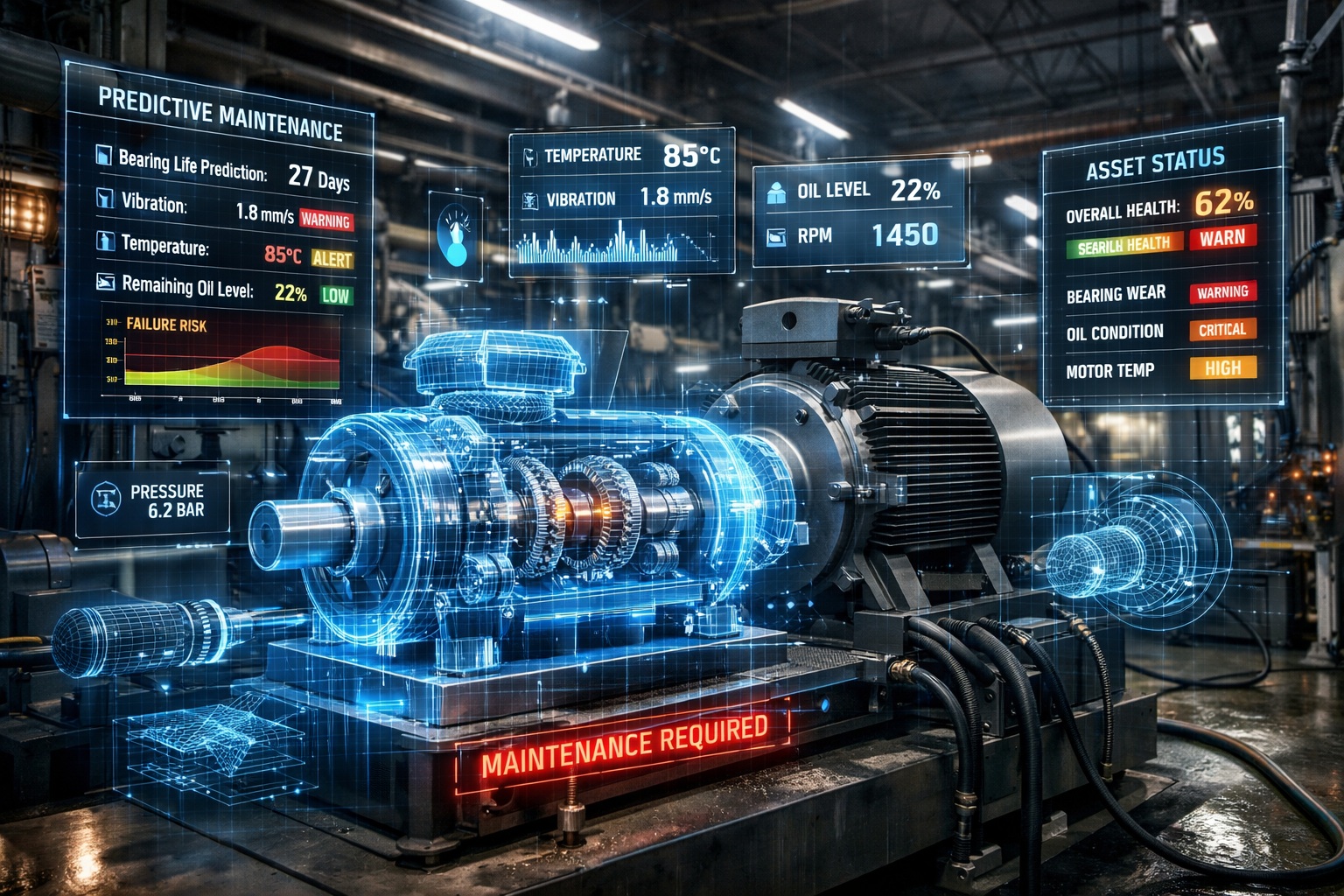
- Data Accessibility: Industrial equipment is now saturated with sensors generating vast streams of data (vibration, temperature, pressure, acoustics). For the first time, this data isn't just being stored; it's being fed into cloud-based platforms where powerful machine learning models can analyze it at scale.
- Algorithm Maturity: The AI algorithms that power predictive maintenance have moved from the lab to the factory floor. They are more accurate, easier to deploy, and increasingly available as off-the-shelf solutions from major tech vendors and specialized startups.
- The Skills Gap Catalyst: As experienced technicians retire, companies are losing decades of "tribal knowledge." They can no longer rely on a veteran technician's "gut feel" to know when a machine is about to fail. AI is becoming the only viable way to capture and scale that expertise, embedding it into a system that can guide the next generation of technicians.
- Economic Necessity: In a global market with tight margins, an unexpected week of downtime can wipe out a quarter's profit. The C-suite is now keenly aware of this vulnerability and is actively seeking solutions that provide budget certainty and operational resilience. Predictive maintenance, with its clear ROI, is a compelling answer.
“What Good Looks Like”: The Predictive Maintenance Playbook
Leading organizations aren't just buying AI; they're integrating it into a new operational philosophy.
- Start with Criticality: They don't try to predict everything. They perform a rigorous Business-Criticality Assessment on their assets to identify the 10-20% of equipment whose failure has the most significant financial impact. This is where they focus their initial AI investment.
- Data Quality Over Quantity: They ensure the data feeding their models is clean, consistent, and relevant. This means investing in proper sensor installation, data governance, and ensuring their CMMS/EAM systems contain accurate maintenance histories. Garbage in, garbage out still applies.
- Human-in-the-Loop Workflow: The AI doesn't autonomously dispatch work orders. It generates "prescriptive" alerts (e.g., "High probability of bearing failure in Asset X within 7-10 days due to increasing vibration patterns"). A human reliability engineer validates the alert, reviews the data, and then creates a work order with the necessary context for the technician.
- From Prediction to Production: The ultimate goal is to link predictive alerts directly to the supply chain and production scheduling. A high-confidence alert might automatically trigger an order for a replacement part and schedule a maintenance window during a planned production changeover, turning an "unplanned" event into a routine, minimally disruptive repair.
It’s Not Just About Prediction
The true power of an AI-native maintenance platform extends beyond just flagging potential failures.
- Where AI Helps:
- Root Cause Analysis at Scale: When a failure does occur, AI can instantly analyze months of data from that asset and its peers to identify the subtle chain of events that led to the breakdown, turning a lengthy investigation into an automated report.
- Optimizing Maintenance Plans: AI can analyze the effectiveness of your existing PM schedules. Is a monthly check on a pump actually preventing failures? The data might show it's unnecessary, or that a quarterly inspection with specific vibration analysis is far more effective, freeing up valuable technician time.
- Knowledge Capture and Transfer: An AI copilot can analyze thousands of work orders, manuals, and sensor readings. When a technician is assigned a complex job, the AI can provide a step-by-step procedure, highlight relevant safety warnings from past incidents, and even suggest the right tools for the job, effectively acting as a mentor.
- Where AI Doesn't Help (Alone): AI cannot fix a dysfunctional work management process. If your planning and scheduling are chaotic, AI will simply give you more precise alerts that you are unprepared to act on. The technology must be implemented on a solid foundation of maintenance best practices, including a strong partnership between operations and maintenance teams.
7 Actions for Leaders in the Next 30 Days
This trend is moving too fast to wait for a multi-year strategy document.
- Calculate Your True Cost of Downtime: Task your finance and operations teams to quantify the cost of one hour of unplanned downtime for your most critical production line. Use this number in every conversation about maintenance investment.
- Identify Your Top 5 "Bad Actors": Ask your maintenance team for a list of the five assets that cause the most frequent and costly downtime. This is your pilot program list.
- Audit the Data Trail for One Asset: Pick one of those "bad actors." Can you easily access its complete operational data (from SCADA/historians) and maintenance history (from your CMMS) in one place? If not, you have a data integration problem to solve first.
- Host a "Vendor Demo Day": Invite 2-3 leading vendors in the predictive maintenance space to give a live demo using a sample of your own data. This will quickly demystify the technology.
- Assign an "AI Champion": Designate a technology-forward leader from your reliability or engineering team to be the single point of contact for evaluating and leading a PdM pilot.
- Shift One PM to a CBM Task: Identify one time-based PM task for a critical asset and replace it with a condition-based task (e.g., "Inspect bearing if vibration exceeds X mm/s"). This is the first step toward a predictive mindset.
- Brief Your Leadership Team: Prepare a single-page memo for the C-suite. The topic: "The $91 billion predictive maintenance market and its impact on our operational risk profile." Frame it as a competitive and financial issue, not a technical one.
Conclusion: This is the New Baseline
Evaluate AI against your own downtime, data quality, and ability to act on findings. The cited downtime estimate covers a specified industry sample; it is not a universal loss rate or a guaranteed return from adopting UpFix.
Key Takeaways
- Astute Analytica projects a predictive maintenance market of US$91.04 billion by 2033.
- Astute Analytica estimates median downtime losses of US$125,000 per hour across its stated sample of 11 industries; this is not an estimate for every operation.
- Widespread AI adoption is being driven by the convergence of data accessibility, mature algorithms, the skills gap, and intense economic pressure.
- Successful AI implementation focuses on business-critical assets first and requires a strong foundation of quality data and work management processes.
- AI's true power extends beyond prediction to include AI-assisted root cause analysis, PM optimization, and technician knowledge amplification.
Signals to Watch (Next 6 Months)
- An increase in "as-a-service" offerings for predictive maintenance, lowering the barrier to entry for small and medium-sized manufacturers.
- Major cloud providers (AWS, Azure, Google) launching more industry-specific AI maintenance solutions.
- A growing number of private equity firms and investors citing "predictive maintenance strategy" as a key factor in industrial company valuations.
- The emergence of the "Reliability Data Scientist" as a new, high-demand role in manufacturing organizations.
UpFix is an operations and work management platform with CMMS capabilities. Keep requests, Work Items, procedures, and service history together. Recurring automations require Team or Pro; inventory, analytics, purchasing, and the built-in Assistant require Pro. Connected meter data depends on supported integrations and configuration.