The Routine Catastrophe: When ""Something Goes Wrong"" Was Already a Warning
By UpFix
An explosion at a Pennsylvania metallurgical plant during a 'routine' chemical transfer is a stark reminder that the most familiar procedures can harbor the most catastrophic risks.
The operating models and AI examples in this article are illustrative. They are not a specification of included UpFix features or a measured customer result. See product capabilities and plan limits for the current offer.
When "Something Goes Wrong"
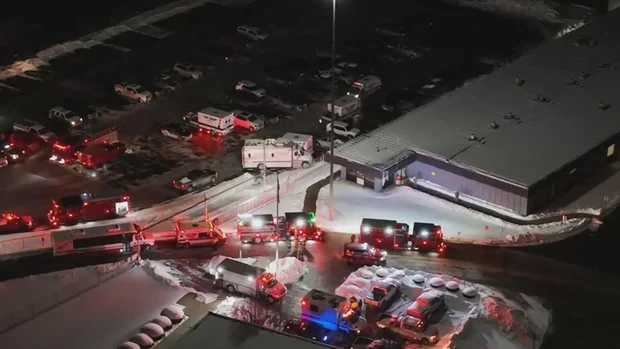
WPXI reported an explosion at the Langeloth Metallurgical Plant in Smith Township on January 29, 2026. This article uses the event as a prompt to review maintenance documentation; the scenarios below do not establish the accident’s cause.
"Something went wrong."
In that simple, uncertain phrase lies the history of almost every preventable industrial disaster. It's the epitaph for a thousand failed procedures, overlooked warnings, and moments of complacency. The Langeloth incident is a critical case study in the immense danger lurking within our most "routine" tasks. The procedures we perform daily, the ones we think we can do in our sleep, are often the ones that have quietly drifted from their safe-by-design origins into a state of latent failure, just waiting for a trigger.
The Anatomy of "Routine" Failure
While the official investigation into the Langeloth explosion is ongoing, the incident is a powerful avatar for a common class of industrial accidents. A chemical transfer is a Standard Operating Procedure (SOP) in countless facilities. It involves a predictable sequence: connect hose A to valve B, monitor pressure C, fill to level D. Its very familiarity is what makes it so dangerous. Complacency sets in, and small deviations begin to occur. These "drifts" from the standard procedure are where catastrophic risk takes root.
The common points of failure in these routine, high-risk tasks are almost always one of three things:
- Procedure Decay: The official SOP was written five years ago for a different pump and a slightly different tanker configuration. Minor equipment changes were never reflected in the document. The laminated binder on the wall is now a well-intentioned piece of fiction.
- The Human Factor: The official procedure is 15 pages long, but the senior technicians have developed a "faster" way that skips a few checks. This tribal knowledge gets passed down, eroding the built-in safety margins until a new combination of factors (a different driver, a hotter day, a slightly higher pressure) turns the shortcut into a catastrophe.
- Component Failure: The procedure itself is perfect, but a critical component within the system is silently failing. A pressure sensor is drifting out of calibration. A hose, nearing the end of its service life, has internal wear that isn't visible. A valve seat is corroded, preventing a perfect seal. These are the exact failures that a robust Preventive Maintenance (PM) program is designed to prevent.
When "something goes wrong," it's rarely a single, unpredictable event. It is almost always the culmination of these slow, silent failures coming together at once.
From Static Procedures to Dynamic Guardrails
For decades, the answer to these problems was more training and better binders. Today, AI provides a fundamentally new set of tools to transform these static, vulnerable procedures into dynamic, intelligent systems that actively prevent failure.
1. Building the Digital Twin of the Procedure:
Instead of a paper checklist, imagine a technician with a tablet. The AI-powered system doesn't just show them the steps; it interacts with the process. It pulls real-time data from sensors on the tanker, the pump, and the stationary tank. The procedure becomes a living thing:
- Step 4: Open main valve. The system verifies that the line pressure is within the safe range of 40–50 PSI before allowing the technician to proceed. If the pressure is 55 PSI, the interface flashes red and says, "WARNING: Line pressure is 10% above safe operating limit. Do not proceed. Check relief valve RV-10."
2. AI-Generated, Ever-Green SOPs:
The AI can generate the initial SOP by parsing the OEM manuals for every component in the system. More importantly, it can help keep it up to date. When a work order is completed to replace the pump with a new model, the AI can flag the chemical transfer SOP and prompt an engineer to review and update the relevant pressure limits and flow rates. It can even analyze technician feedback (voice notes, photos) to suggest clarifications or improvements to the procedure itself.
3. Predictive Maintenance on Procedural Components:
The AI isn't just watching the process; it's watching the health of the components involved. By analyzing the maintenance history, vibration data, and thermal imaging of the pump, valves, and hoses, it can alert the maintenance team before the chemical transfer is even scheduled:
- "Alert: The main transfer pump P-501 has shown a 15% increase in vibration over the last 3 runs. Probability of bearing failure in the next 50 operating hours is 85%. Recommend inspection before next scheduled chemical transfer."
This changes the game from hoping a technician spots a problem to knowing a problem is developing and fixing it proactively. It ensures the "routine" task is always performed with healthy, reliable equipment.
Practical Playbook: Auditing Your Own "Routine" Risks (Next 30 Days)
Every facility has high-risk "routine" tasks like the one at Langeloth. The time to find the flaws is now, not after the incident.
- Identify Your Top 5: List your five most frequent but highest-consequence "routine" tasks. (e.g., chemical transfers, confined space entries, high-voltage switching).
- Perform a "Procedure vs. Reality" Audit: Have an engineer or safety lead observe one of these tasks from start to finish. Compare what the technician actually does to what the official SOP says. Document every deviation.
- Interview the "Do-ers": Sit down with the technicians who perform the task and ask them: "What's the most confusing part of this procedure? What part do you always skip? What could go wrong?"
- Red-Team the Hardware: For one of these critical procedures, inventory every single piece of hardware involved (valves, hoses, sensors, pumps). Check the PM history for each one. Are any overdue for inspection or replacement?
- Digitize One Procedure: Choose one of the five procedures and pilot a digital workflow. Use a tablet or mobile device to create an interactive checklist with photos and required data entry points.
- Instrument a Critical Parameter: Add one key sensor (e.g., a pressure, temperature, or vibration sensor) to a component in one of your critical procedures. Start logging the data and establish a baseline for normal operation.
- Ask "What if?": Run a tabletop exercise. "We're in the middle of a transfer, and the main valve won't close. What do we do, right now?" The quality of the answer will tell you everything you need to know about your team's preparedness.
Conclusion: Make "Routine" Mean Reliable
The phrase "something went wrong" is an admission of surprise. In high-reliability organizations, the goal is to eliminate surprise. The explosion in Pennsylvania is a tragic but valuable lesson: routine does not mean safe. Familiarity can breed complacency, and complexity can hide in plain sight. By leveraging AI to create dynamic, data-driven procedures and to predict the failure of the underlying equipment, leaders can finally move beyond hope as a strategy. They can ensure that when a task is called "routine," it is because it is reliably, verifiably, and intelligently controlled from start to finish.
Key Takeaways
- An explosion during a "routine" chemical transfer at a Pennsylvania plant highlights the hidden risks in familiar tasks.
- Failures in such procedures often stem from a combination of outdated SOPs, human factor deviations, and silent component degradation.
- AI can transform static, paper-based procedures into dynamic, interactive workflows that monitor real-time sensor data and provide safety guardrails.
- AI-powered predictive maintenance can identify at-risk components (pumps, valves, hoses) before a critical procedure begins.
- Leaders must proactively audit their own high-risk "routine" tasks to find and fix latent failures before they lead to a catastrophe.
Signals to Watch (Next 6 Months)
- Official NTSB/CSB Findings: The formal report on the Langeloth incident will provide specific details on the root cause, likely influencing regulations for similar processes.
- Rise of "Dynamic SOPs": Expect to see software vendors heavily marketing AI-powered, interactive digital procedures as a direct response to these types of failures.
- Insurance Premium Hikes: Insurers will likely increase premiums for facilities that cannot demonstrate robust, digitally-managed procedures for high-risk tasks.
- Increased Demand for IIoT Sensors: The need for real-time data to power dynamic SOPs will accelerate the adoption of low-cost sensors on previously "dumb" equipment.
- Regulation on "Procedure Drift": OSHA and the EPA may introduce new rules requiring companies to periodically re-validate their written SOPs against actual field practices.
UpFix is an operations and work management platform with CMMS capabilities. Keep requests, Work Items, procedures, and service history together. Recurring automations require Team or Pro; inventory, analytics, purchasing, and the built-in Assistant require Pro. Connected meter data depends on supported integrations and configuration.