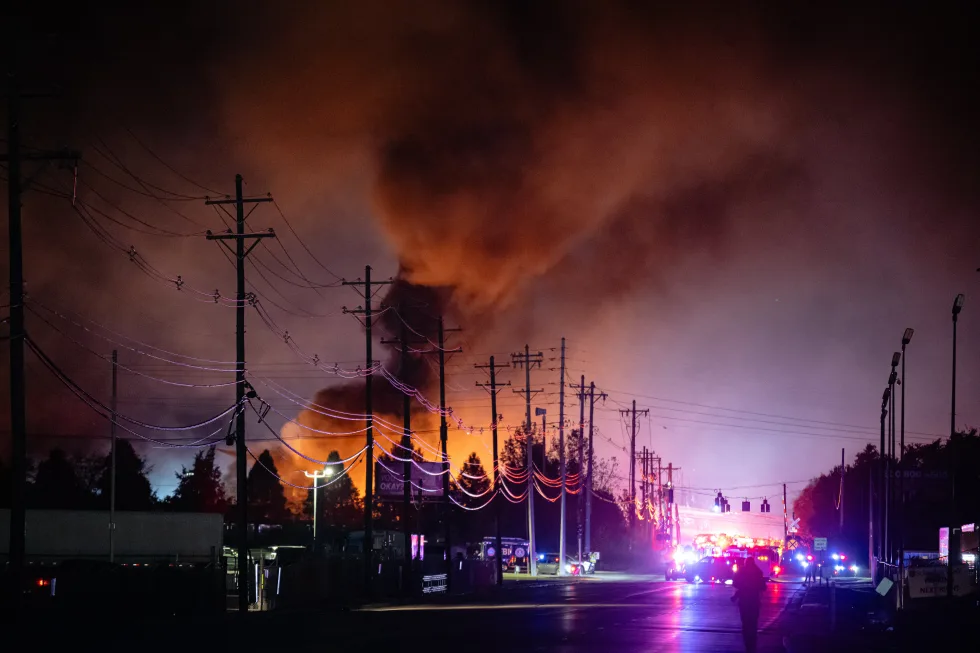
The catastrophic failure of Flight 2976 wasn't just an aviation incident; it was a critical maintenance signal that industrial leaders cannot afford to ignore.
A Routine Flight Ends in Tragedy
On January 15, 2026, UPS Airlines Flight 2976, a McDonnell Douglas MD-11F, crashed on approach to Louisville, Kentucky. The incident, which resulted in the tragic loss of the flight crew, immediately triggered a high-stakes investigation by the National Transportation Safety Board (NTSB). While the final report is still pending, the preliminary findings have sent a shockwave through every industry that relies on heavy machinery. The culprit wasn't a freak weather event or a novel system failure; it was something far more familiar and menacing: a maintenance breakdown.
The Incident: A Bearing's Silent Fracture
Investigators quickly homed in on the aircraft's No. 1 engine, discovering fatigue cracks in a critical component, the spherical bearing assembly that helps secure the engine to the wing. According to NTSB releases and subsequent reporting, this wasn't a new issue. The specific part had a history of failing, with at least four similar instances noted on other aircraft in the years prior.
The failure on Flight 2976 was catastrophic. The bearing assembly gave way, leading to an in-flight engine separation that rendered the aircraft uncontrollable. The immediate question wasn't just what failed, but why the failure wasn't caught. The cracks, investigators noted, had not been detected during regular maintenance inspections, raising profound questions about the adequacy of existing maintenance schedules, the inspection methods used, and the underlying procedures that govern how technicians interact with complex machinery.
Root Causes: What Breaks in a Real Maintenance System
An incident of this magnitude is never the result of a single error. It’s the product of a system where multiple layers of defense have failed. For maintenance and reliability leaders, the unfolding story of Flight 2976 is a case study in how maintenance programs break down in the real world.
- The Normalization of Deviance: When a known issue (like a part with a history of failure) doesn't lead to a catastrophic event for a long period, teams can become desensitized. Procedures that were once rigid can soften, and the sense of urgency can fade. The fact that this component had failed before without causing a crash may have inadvertently lowered the perceived risk.
- Inadequate Inspection Methods: Fatigue cracks are notoriously difficult to detect with the naked eye, especially in their early stages. If the prescribed inspection method relied solely on visual checks under tight turnaround pressure, the probability of a miss was high. This points to a gap between the maintenance plan and the physical reality of asset degradation.
- Procedural Drift and Human Factors: Some reports have suggested that maintenance workers may have damaged the assembly while improperly using a forklift during a previous engine reattachment. Whether or not this is confirmed in the final NTSB report, it highlights a critical vulnerability: procedural drift. Over time, official procedures can be replaced by informal "tribal knowledge" or shortcuts, especially under pressure. Without rigorous oversight and continuous training, the way work is actually done can diverge dangerously from how it was designed to be done.
- Lagging Data and Missed Signals: The prior failures of the bearing assembly were critical data points. They were signals of a systemic weakness. A key question for leaders is whether these signals were effectively captured, analyzed, and, most importantly, acted upon. Were maintenance protocols for the MD-11F fleet updated? Were inspection frequencies increased? Or was the data logged away in a system where it couldn't trigger a proactive response?
“What Good Looks Like”: Best-Practice Countermeasures
Preventing a similar failure in an industrial setting requires moving beyond a reactive, compliance-based mindset. "Good" maintenance isn't just about ticking boxes; it's about building a resilient system.
- Dynamic Inspection Schedules: Best-in-class organizations don't rely on static, time-based inspection schedules. They incorporate condition data, operational history, and failure history to create dynamic schedules. An asset with a known failure mode, like the spherical bearing, should be subject to more frequent and more intensive inspections.
- Investing in Advanced NDT: Relying on visual inspection for detecting microscopic fatigue cracks is a recipe for failure. Leading organizations invest in and properly train their teams on Non-Destructive Testing (NDT) methods like ultrasonic, eddy current, or dye penetrant testing, which are designed to find flaws that the human eye cannot.
- Rigorous Procedure Adherence and Auditing: Procedures are not guidelines; they are rules. This requires a culture of discipline, supported by regular audits and "over-the-shoulder" checks to ensure that technicians are performing tasks exactly as specified. It also means empowering technicians to stop a job if they don't have the right tools or clarity on the procedure.
- Closed-Loop Failure Analysis: When a part fails, the process cannot end with its replacement. A robust Failure Reporting, Analysis, and Corrective Action System (FRACAS) is essential. Every failure, no matter how small, must be treated as a source of invaluable data that is used to update maintenance strategies for all similar assets.
Seeing the Cracks Before They Form
While culture and procedure are foundational, technology acts as a powerful accelerant. This is where AI-enabled maintenance comes in.
- Where AI Helps:
- Predictive Analytics: An AI model fed with historical failure data, sensor readings (like vibration and temperature), and operational parameters could have flagged the No. 1 engine on Flight 2976 as a high-risk asset. It could have identified subtle patterns in the data that preceded previous bearing failures, effectively predicting the future by learning from the past.
- AI-Powered NDT Analysis: AI algorithms can analyze NDT image data (like ultrasounds) far more quickly and accurately than a human inspector, flagging potential cracks or material defects that might be missed.
- Connecting the Dots: An AI-native CMMS could have automatically connected the dots between the four previous bearing failures and every other MD-11F in the fleet, flagging the part for a mandatory, immediate inspection and raising the risk profile across the board.
- Where AI Doesn't Help (Alone): AI is not a substitute for a broken culture. An AI system can generate a work order to inspect a high-risk component, but it cannot force a technician to use the correct procedure. It can predict a failure, but it cannot instill the discipline to properly document findings. The most powerful AI is useless if its recommendations are ignored or if the foundational maintenance processes are flawed.
7 Actions for Leaders in the Next 30 Days
The lessons from Flight 2976 are immediate and actionable.
- Identify Your "Spherical Bearings": Convene your senior reliability engineers and maintenance supervisors. Ask the question: "What are the 10 most critical single points of failure in our operation that rely on traditional inspection methods?"
- Audit High-Risk Procedures: Select one of those critical components and conduct a "shop floor to manual" audit. Observe the maintenance procedure as it's actually performed and compare it, line by line, to the official documentation.
- Review Your FRACAS Effectiveness: Pull the last five significant component failures. Was a true root cause analysis performed? Was the maintenance strategy for similar assets updated as a result? If not, your learning loop is broken.
- Stress-Test Your Data Systems: If a critical component failed today, how quickly and easily could you pull up the complete maintenance and failure history for every similar component across your entire operation? If the answer isn't "in minutes," your data is siloed.
- Pilot One Advanced NDT Method: Task your team with identifying one area where visual inspection is the primary defense and research the business case for introducing a more advanced NDT method.
- Re-Brief on Procedural Discipline: Hold a stand-down meeting with your maintenance teams. Use the UPS crash (without speculation) as a case study on the non-negotiable importance of procedural adherence.
- Ask Your Team About "Close Calls": Create an anonymous channel for technicians to report "near misses" or procedural shortcuts they've witnessed. This isn't about blame; it's about finding where the system is breaking down before an incident occurs.
Conclusion: This is the New Baseline
The tragedy of Flight 2976 serves as a stark reminder that in the world of maintenance, the past is always prologue. Relying on outdated inspection methods, tolerating procedural drift, and failing to learn from historical data is no longer a viable strategy. The new baseline for maintenance and reliability leadership is a system that is proactive, data-driven, and relentlessly focused on procedural discipline. Anything less is a gamble, and the stakes are simply too high.
Key Takeaways
- Catastrophic failures are rarely single-point events; they are the result of systemic breakdowns in procedure, inspection, and data analysis.
- Relying on traditional, time-based visual inspections for critical components is a high-risk gamble in the modern industrial environment.
- "Tribal knowledge" is a vulnerability. If critical maintenance procedures are not formally documented and audited, they will inevitably drift.
- AI-powered predictive maintenance can act as a powerful early warning system, but it cannot fix a broken maintenance culture or poor procedures.
- The true cost of a maintenance failure isn't the repair; it's the catastrophic operational downtime and safety risk.
Signals to Watch (Next 6 Months)
- Increased NTSB and FAA scrutiny on aging air cargo fleets, potentially leading to new Airworthiness Directives that mandate enhanced inspections.
- A surge in demand for advanced Non-Destructive Testing (NDT) technologies and certified technicians across all industrial sectors.
- More vendors marketing "AI-powered FRACAS" (Failure Reporting, Analysis, and Corrective Action System) tools.
- A noticeable increase in insurance premiums for industries that fail to demonstrate proactive, data-driven maintenance and reliability programs.
UpFix.ai is building an AI-native CMMS and maintenance copilot that helps teams turn telemetry, manuals, and work history into clear procedures, faster troubleshooting, and proactive maintenance planning.”
Sources: AP News, CBS News, The Guardian, Texarkana Gazette, Wikipedia