Your Biggest Downtime Threat Isn't a Machine: It's the Skills Gap
By UpFix
The manufacturing skills gap is now a direct threat to uptime. Learn how maintenance leaders can retain tribal knowledge, train technicians, and reduce downtime.
The operating models and AI examples in this article are illustrative. They are not a specification of included UpFix features or a measured customer result. See product capabilities and plan limits for the current offer.
The Threat Inside the Walls
For years, maintenance leaders have focused their attention on the machinery. They've worried about asset reliability, MTBF (Mean Time Between Failures), and PM (Preventive Maintenance) compliance. But a recent, stark statistic reveals that the most significant threat to operational stability may not be on the factory floor, but walking out of it for the last time.
A skills gap can make diagnosis and repair harder when experience is concentrated in a few people. Review your own response times, training needs, and repeat failures rather than assuming a universal percentage or causal estimate.
The Trend: The Great Experience Drain
The industrial skills gap is a crisis with two distinct fronts. The first is the well-documented shortage of new talent entering the trades. But the more immediate and painful front is the "great experience drain", the mass retirement of Baby Boomer technicians who are taking 30-40 years of priceless, hands-on knowledge with them.
This isn't just about losing headcount; it's about losing an entire generation of intuitive, non-documented expertise. These veteran technicians possess a "feel" for the machinery, an encyclopedic mental catalog of past failures, and an instinct for troubleshooting that is almost impossible to replicate.
Root Causes: Why This Problem is So Hard to Solve
- The Retirement Wave: The last of the Boomer generation is now approaching retirement age, and there are simply not enough Gen X and Millennial technicians in the pipeline to replace them.
- The Stigma of the Trades: Societal and educational pressures have pushed students toward four-year college degrees, often at the expense of vocational and technical training.
- The Technology Chasm: A technician today needs to be a master of mechanical systems, a hydraulics expert, a software troubleshooter, and a data analyst.
- Failure to Capture "Tribal Knowledge": Most organizations have done a poor job of systematically capturing the wisdom of their senior technicians.
"What Good Looks Like": Building a Resilient Workforce
- Structured Knowledge Capture Programs: Pair senior technicians with junior ones; the goal is not just to train, but to document.
- Investing in Modern Training Tools: AR headsets, digital libraries of video-based work instructions.
- Redefining the Technician Role: Create specialized roles—mechanical specialist, I&C expert, reliability engineer.
- Building a Strong College Pipeline: Partner with local colleges and technical schools.
The Copilot for the Modern Technician
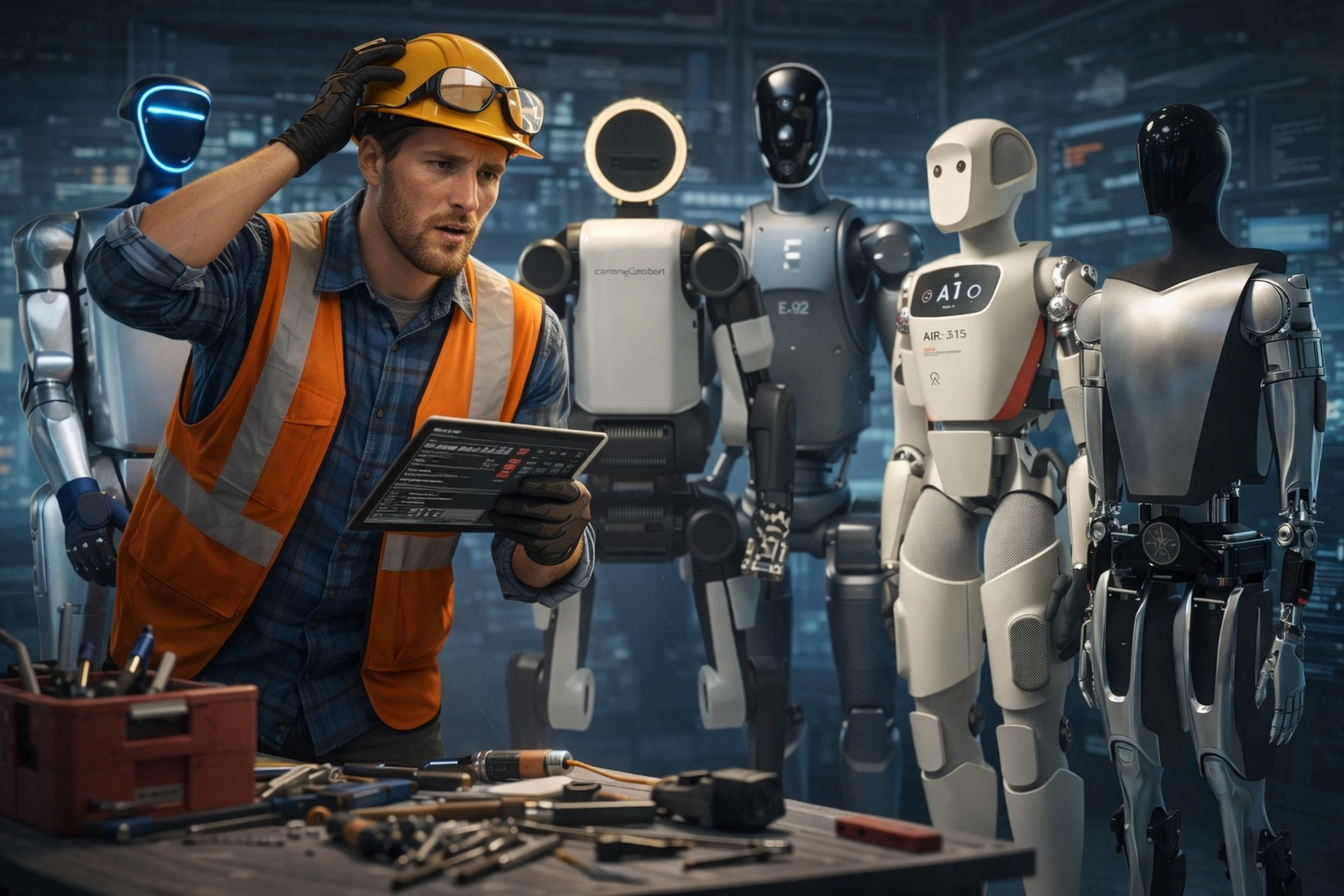
Technology, particularly AI, is emerging as the single most powerful tool for bridging the experience gap.
Where AI Helps: Guided troubleshooting, democratizing expertise, on-the-job training.
Where AI Doesn't Help (Alone): AI is an amplifier, not a replacement for human skill. It requires a baseline of mechanical and technical aptitude.
7 Actions for Leaders in the Next 30 Days
- Map Your Retirement Risk
- Conduct "Exit Interviews" Now
- Pilot a Video Work Instruction
- Call Your Local College
- Audit Your CMMS Data Quality
- Identify One "Knowledge Bottleneck"
- Reframe the Budget Conversation
Key Takeaways
- A skills gap can make diagnosis and repair harder when experience is concentrated in a few people. Review your own response times, training needs, and repeat failures rather than assuming a universal percentage or causal estimate.
- The retirement of veteran technicians is creating a "knowledge vacuum."
- Solving the crisis requires structured knowledge capture, modern training tools, and building talent pipelines.
- AI is a powerful force multiplier, acting as a "copilot" for junior technicians.