Winter Grid Stress Exposed the Facility Power Reliability Gap
By UpFix
Recent outage events showed that many facilities are grid-aware but not failure-ready. Reliability now depends on internal electrical maintenance intelligence.
The operating models and AI examples in this article are illustrative. They are not a specification of included UpFix features or a measured customer result. See product capabilities and plan limits for the current offer.
The grid is volatile. Your facility cannot be.
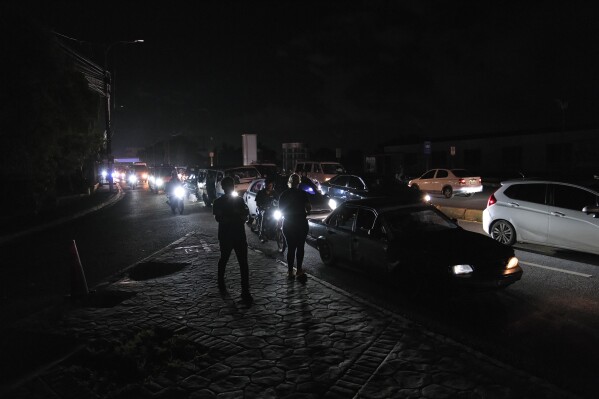
Use a winter power interruption as an illustrative readiness exercise. Review how your facility records an interruption, assigns follow-up work, and checks completion under its approved operating procedures.
Most operators have already invested in backup power and contingency procedures. Yet many sites still experience preventable downtime because internal electrical assets are maintained as static infrastructure instead of dynamic failure systems.
If switchgear, UPS strings, protection relays, and transfer sequences are not managed with live reliability intelligence, the site remains fragile even with redundant architecture on paper.
Root causes behind facility-side power failures
Hidden dependency chains
Facilities often test generators and UPS independently, but the real failure path is in transfer coordination, breaker health, and protection settings across the chain.
Inspection without decision quality
Teams collect thermal scans and inspection notes but do not convert them into risk-prioritized work plans. Data is gathered, not operationalized.
Aging assets with sparse failure history
Critical electrical equipment can run for long periods without incident, which creates false confidence. When it fails, impact is severe and root cause evidence is incomplete.
Procedures not tuned to real load behavior
Static procedures fail during real disturbances because load profiles, harmonics, and startup sequences changed over time but maintenance assumptions did not.
What good looks like for industrial facilities
Strong teams run a maintenance-centered resilience model. They do not only ask, "Do we have backup power?" They ask, "Can we prove transfer reliability under today’s actual load and asset condition?"
They maintain a live critical-power graph that links asset condition, inspection evidence, event logs, and work order completion quality. AI helps by surfacing weak links before a disturbance tests them.
Executive briefing playbook: 8 actions that reduce outage risk
- Map the full power chain from utility feed to final critical loads, including every transfer and protection point.
- Set condition thresholds for thermal anomalies, breaker cycle counts, battery impedance drift, and relay events.
- Create failure-mode specific PMs instead of generic electrical checklists.
- Run integrated transfer tests under representative loads, not isolated component tests only.
- Use AI triage on inspection notes to rank defects by probable business impact and outage propagation risk.
- Tie spare strategy to criticality for relays, breaker components, and UPS consumables with explicit recovery-time targets.
- Instrument post-event learning so every power disturbance updates failure fingerprints and future maintenance plans.
- Report resilience as operating metrics such as transfer success rate, latent defect age, and high-risk work-order backlog.
AI maintenance angle: move from monitoring to intervention
The useful AI layer in facilities does three things. It clusters recurring weak signals, recommends targeted work, and captures technician outcomes in structured form so the model gets better after each intervention.
UpFix is an operations and work management platform with CMMS capabilities. Keep requests, Work Items, procedures, and service history together. Recurring automations require Team or Pro; inventory, analytics, purchasing, and the built-in Assistant require Pro. Connected meter data depends on supported integrations and configuration.
Signals to Watch
- Growing count of unresolved thermal anomalies in critical electrical rooms
- Protection relay nuisance trips increasing quarter over quarter
- Higher failure rates during transfer tests versus previous baseline
- Backlog growth on high-criticality electrical corrective work orders
- Mismatch between generator test pass rates and real disturbance performance
Bottom line
Power resilience is no longer a backup-power procurement topic. It is a maintenance execution topic. Facilities that operationalize electrical reliability intelligence will ride through grid volatility. The rest will discover hidden failure paths during the worst possible week.