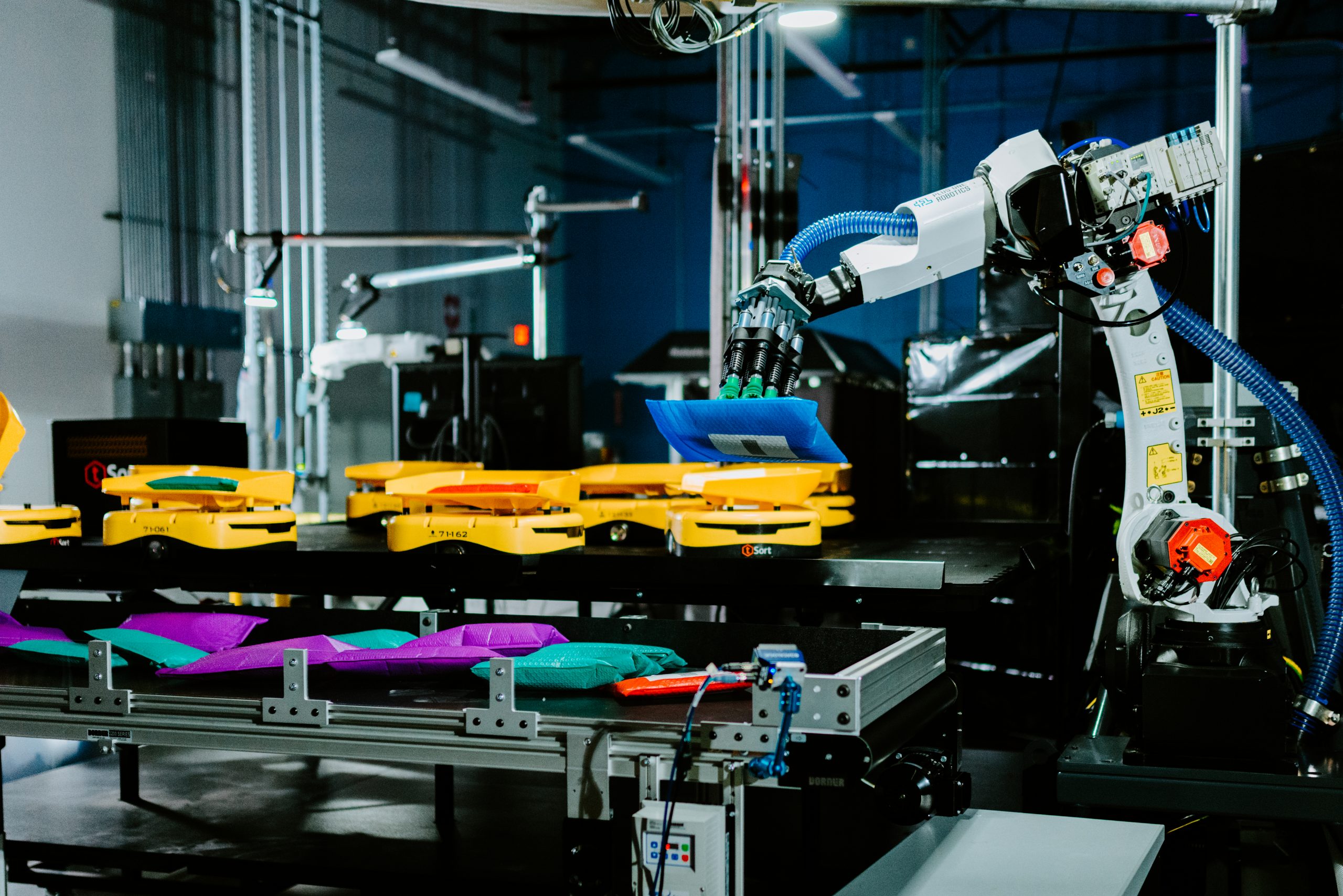
Autonomous Robots Are Scaling Faster Than Reliability Discipline
By UpFix
Robotics pilots are graduating to production, but uptime is now the bottleneck. Here is the operating model that keeps autonomous systems productive.
The operating models and AI examples in this article are illustrative. They are not a specification of included UpFix features or a measured customer result. See product capabilities and plan limits for the current offer.
The robotics bottleneck in 2026 is not deployment, it is maintainability
Most operations leaders no longer ask whether robotics belongs in the plant or warehouse. That argument is over. The real question is whether the system can run at target throughput for months without burning out maintenance teams.
The International Federation of Robotics said in January 2026 that industrial robot installation value reached a record US$16.7 billion. That tells us spending is real. It does not tell us whether reliability systems are keeping pace with autonomy.
In many deployments, they are not. Teams improved path planning and task orchestration, but left failure workflows stuck in email threads, disconnected tickets, and tribal knowledge. When the robot pauses, your data architecture becomes visible in seconds.
Root cause: autonomy increased the speed of failure propagation
Autonomous systems reduce human handling in normal flow, but they also compress the time between anomaly detection and operational impact. A sensor drift, battery thermal issue, or vision confidence drop can cascade into queue congestion quickly.
Three failure modes show up repeatedly:
- Telemetry without decision logic: events stream in, but no policy maps severity to action and SLA.
- Work orders without context: technicians get tickets with symptoms, not state history or likely cause.
- Knowledge without retrieval: lessons from prior failures live in chat and are not reusable.
UpFix is an operations and work management platform with CMMS capabilities. Keep requests, Work Items, procedures, and service history together. Recurring automations require Team or Pro; inventory, analytics, purchasing, and the built-in Assistant require Pro. Connected meter data depends on supported integrations and configuration.
What good looks like for robot reliability
1) Event-to-action contracts
Define explicit contracts per robot class: which event triggers what response, with what timeout, and who owns escalation. No ambiguous "monitor" states.
2) Failure fingerprints
Use repeatable fingerprints for recurring faults such as localization drift under reflective surfaces or gripper cycle degradation. Each fingerprint maps to a tested playbook.
3) Closed-loop learning
Every resolved failure should update guidance quality. If the same issue reopens, your loop is broken.
AI maintenance that is realistic, not hype
AI should not pretend to be a technician. It should compress time to high-quality action. In practice, that means:
- Ranking probable causes from multi-signal telemetry
- Auto-populating work orders with machine context and safe checks
- Retrieving similar historical incidents and resolution outcomes
- Highlighting asset-level reliability drift before catastrophic failure
The win is not a futuristic robot self-repair narrative. The win is fewer wrong truck rolls, faster first-time fix, and lower repeat incidents.
Operator playbook: 9 actions for the next 90 days
- Inventory critical failure points by subsystem: power, mobility, perception, end-effector, network.
- Set reliability SLOs by zone, shift, and mission type, not just fleet-wide averages.
- Implement event severity tiers that auto-generate work order priority and response windows.
- Attach telemetry snapshots to every work order by default.
- Create top-20 failure fingerprints with known checks, parts, and escalation criteria.
- Add verification gates after repair: function test, thermal check, and stability check.
- Track repeat failure rate at 7/30/60 days, not just close rate.
- Run weekly reliability reviews with operations and maintenance in one room.
- Promote proven fixes to standards so knowledge survives shift changes and turnover.
Signals to Watch
- Rising count of “no fault found” closures
- Increasing manual overrides per shift
- Repeat incidents on the same asset within 30 days
- Battery or thermal alarms clustering by zone
- Gap between incident detection and first technician action
- Divergence between modeled uptime and observed uptime
Bottom line
Robotics scale is no longer constrained by procurement. It is constrained by reliability execution. The operators that win in 2026 will treat maintenance as an AI-native intelligence layer, where telemetry, work orders, and field knowledge run as one continuous loop.